









Solar Ready · Ravenhall, Melbourne
Nike rooftop solar with SunLock
Solar that makes a statement.
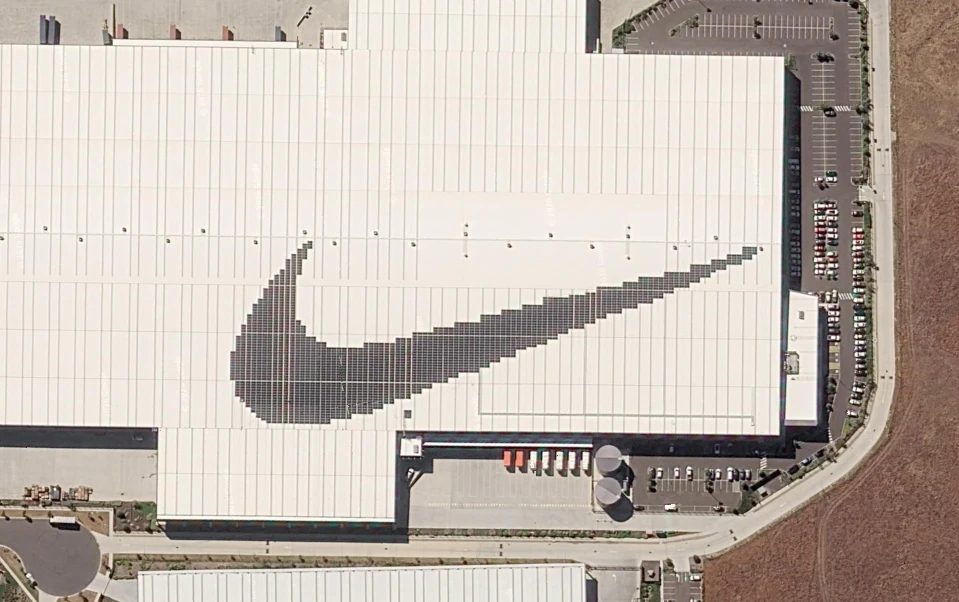
Nike’s Ravenhall distribution centre turns a solar array into its signature Swoosh. Gamcorp worked with SunLock to assess the mounting frame and roof connections, using site testing to define the structural installation requirements.
ResultThe mounting frame and roof connections were certified with defined rail, fixing and roof-area conditions.
- Client & mounting system
- SunLock
- Solar installer
- Energy Aware
- Location
- Ravenhall, Victoria
- Gamcorp service
- Solar Ready
The design
A working roof can be a design feature.
Commercial solar does not have to be a uniform block of panels. Here, the panel layout gives the roof a recognisable identity while generating electricity.
The shape still has to work with the building beneath it. Roof supports, wind exposure and fixing positions determine how the mounting system can be installed. Gamcorp’s role was to turn those structural constraints into clear installation conditions for SunLock.
Our scope
What we completed.
Site-specific mounting assessment
We assessed the SunLock flush-mount frame and its non-penetrating roof clamps for the proposed layout and site wind conditions.
Roof connection testing
The assessment used on-site pull testing of the clamp and roof-sheet connections, including full ribs, lapped ribs and locations away from the roof supports.
Array frame certification
We issued a site-specific array frame engineering certificate with requirements for rail orientation, fixing positions, roof zones and installation exclusions.
Finding a workable arrangement
The detail behind the shape.
The roof structure had already been certified for solar, according to the information supplied to Gamcorp. Our task was to assess the mounting frame and how it connected to that roof. The certificate does not cover the solar modules themselves or recertify the whole building.
Testing & solutions
Check the connection, then define the layout.
Testing without masking movement
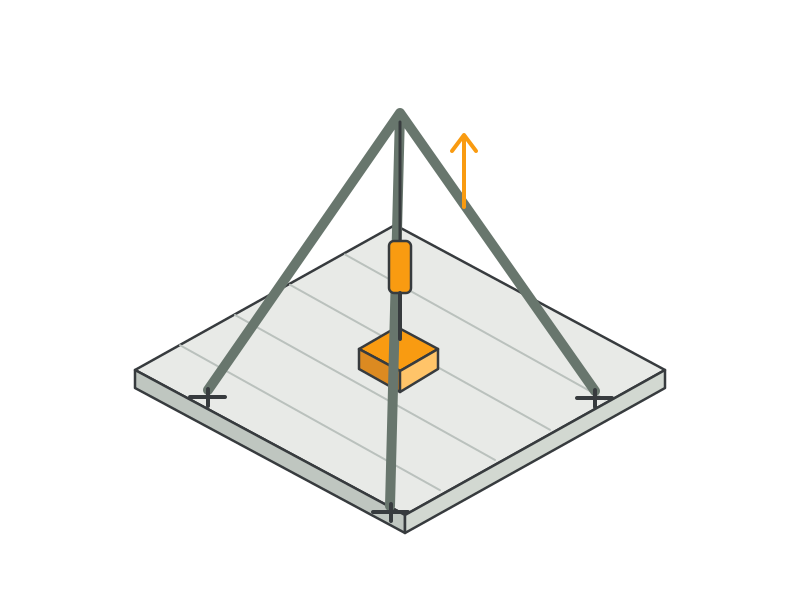
A large tripod applied the pull load without pushing down on the roof sheet or its internal clips. This avoided adding support that could make the connection appear stronger than it was.
Working around overlapping roof sheets
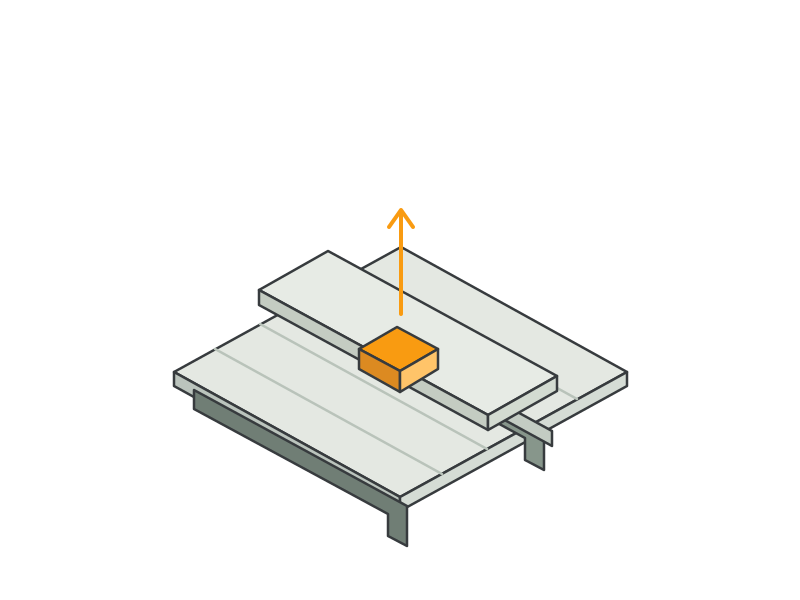
Testing examined both full roof ribs and lapped sections where sheets overlap. The assessment considered nearby doubled roof supports and used the findings to define a limited allowance for clamps away from those supports.
Matching the frame to each roof zone
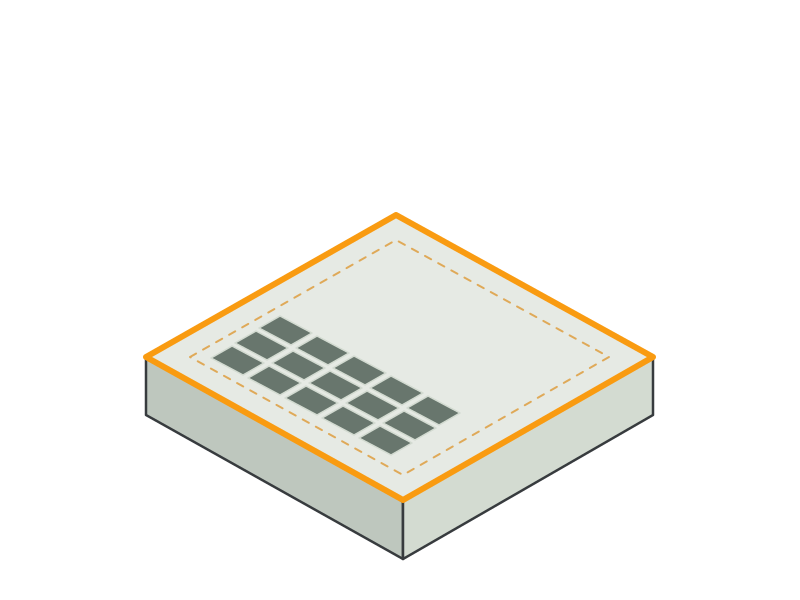
Wind demand and rail direction changed the installation requirements. We specified different rail arrangements and fixing spacing by roof zone, rather than treating the entire roof as one condition.
Keeping unsupported areas out
The certificate excluded panels on roof overhangs and verandas. The supplied layout history also records panels being relocated from an awning, showing how the design developed around the building’s constraints.
Concept illustrations explaining the assessment. Not construction details.
The result
A certified mounting design with clear conditions.
- Connections checked: roof-sheet testing informed the mounting assessment.
- Installation requirements documented: the certificate defined the assessed rail and fixing arrangements, limited off-support locations and excluded roof areas.
- Scope kept clear: the frame and connections were certified subject to those conditions. Manufacturer warranty concerns and possible roof-sheet noise were noted separately.
The finished installation shows how solar can become a design feature. Gamcorp’s contribution was the structural assessment and conditional certification behind the mounting arrangement.
Start a project
Planning a distinctive solar installation?
Tell us about the layout, roof and mounting system you are considering.